Malaysian Noodle Delights Part 3 of 3
Sunday 2024/9/29


In Malaysia, noodles are popular staple, particularly in Malaysian Chinese cuisine, but used by other groups as well. Noodles such as bi hoon (米粉, Malay: bihun; rice vermicelli), kuay teow (粿條) or ho fun (河粉, flat rice noodles), mee (麵, Malay: mi; yellow noodles), mee suah (麵線, wheat vermicelli), yee meen (伊麵, golden wheat noodles), dongfen (冬粉, cellophane noodles), Lao Shu Fen (老鼠粉, silver needle noodles), and others provide an alternative source of carbohydrate to a serving of rice that accompanies every meal.
I am preparing 9 Malaysian noodle dishes for 3 episodes.
3 episodes exploring:
Part 1:Asam Laksa; Char kway teow; Curry mee 《Published》
Part 2:Kerabu Beehoon; Laksa Lemak; Laksam 《Published》
Part 3:Mee Bandung Muar; Mee Calong; Mee Siam 《Now》
Part 3:Mee Bandung Muar; Mee Calong; Mee Siam

▲ 7. Mee Bandung Muar
Mee Bandung Muar, or simply mee bandung, is a traditional Malaysian cuisine which originated in Muar, Johor, Malaysia.
The word bandung in its name is derived from the literal meaning of the word in the Malay language, which means "mixture", "combined", "coupled", "doubles" or "pairs", as is illustrated in several Malay words like Sirap bandung (rose syrup beverage mixed with condensed milk) and Rumah berbandung (semi-detached or duplex house). Meanwhile the district of Muar is commonly and widely known to be the origin place of Mee Bandung.
Mee bandung is a cuisine that was originally cooked with yellow noodles coupled with egg in addition to a thick broth-gravy made of a combination of dried shrimps, onion, spices, shrimp paste and chilies.. Then the dish was upgraded by adding prawn, meat, fish cakes and vegetables.
The word bandung in its name is derived from the literal meaning of the word in the Malay language, which means "mixture", "combined", "coupled", "doubles" or "pairs", as is illustrated in several Malay words like Sirap bandung (rose syrup beverage mixed with condensed milk) and Rumah berbandung (semi-detached or duplex house). Meanwhile the district of Muar is commonly and widely known to be the origin place of Mee Bandung.
Mee bandung is a cuisine that was originally cooked with yellow noodles coupled with egg in addition to a thick broth-gravy made of a combination of dried shrimps, onion, spices, shrimp paste and chilies.. Then the dish was upgraded by adding prawn, meat, fish cakes and vegetables.
Mee bandung must not be mistaken as a dish linked to or originating from Bandung, Indonesia, because they are not related at all despite similarity in the names.
EQUIPMENT
· Saucepan
· Wok
INGREDIENTS
· 600 g yellow noodles or use about 300 grams dried egg noodles
· 3 large tomatoes quartered
· 4 large eggs
· 8 stalks yu choy
· 250 g large shrimp deveined
· 3 Tbsp oil
BEEF STOCK:
· 500 g beef stew
· 4 cups water
INGREDIENTS TO GRIND:
· 2 Tbsp red chili paste I used store-bought sambal oelek
· 1 large onion peeled and quartered
· 8 cloves garlic peeled
· 4 slices ginger
· 50 g dried shrimp soaked in warm water until soft
· 1/2 cup roasted peanuts
SEASONINGS:
· 1 Tbsp oyster sauce
· 4 Tbsp sugar or more as needed
· 3 Tbsp ketchup
· 1 Tbsp tomato paste
· Salt to taste
SERVE WITH:
· Fried tofu
· Crispy fried shallots / bawang goreng
· Cilantro or parsley leaves
· Green chili
· Limes
INSTRUCTIONS
1. Put all ingredients for grinding in a food processor and process into a paste.
2. Blanch the yu choy in a boiling water for a minute and then refresh with cold water and set aside.
3. Cook the noodles according to instruction. Fresh yellow noodles usually only needs to be blanch in boiling water for less than a minute.
COOKING ON THE STOVE:
1. Put the beef in a saucepan and add 4 cups of water. Bring to a boil and then lower the heat to let it gently simmer until the beef is tender. Remove the beef from the stock.
2. Preheat a large heavy-bottom wok. Add 3 Tbsp of oil. Add the ingredients you grind earlier and saute for about 3-5 minutes. Add the beef stock, tomatoes, and seasonings. Continue to cook for another minute. Have a taste and adjust to your preference.
3. Add the prawns and cook until they just start to turn pink. Add the beef pieces back into the gravy. Crack in 4 eggs and let them cook undisturbed until they are set. Turn off the heat.
ASSEMBLING:
1. Portion the noodles out into a serving platter. Top with some fried tofu. Portion out some beef, prawns, chunk of poached egg, and a generous ladle of gravy over everything. Garnish with fried shallots, chopped green onion, cilantro/parsley leaves, green chili slices. Squeeze some lime juice over it and serve immediately.
· Saucepan
· Wok
INGREDIENTS
· 600 g yellow noodles or use about 300 grams dried egg noodles
· 3 large tomatoes quartered
· 4 large eggs
· 8 stalks yu choy
· 250 g large shrimp deveined
· 3 Tbsp oil
BEEF STOCK:
· 500 g beef stew
· 4 cups water
INGREDIENTS TO GRIND:
· 2 Tbsp red chili paste I used store-bought sambal oelek
· 1 large onion peeled and quartered
· 8 cloves garlic peeled
· 4 slices ginger
· 50 g dried shrimp soaked in warm water until soft
· 1/2 cup roasted peanuts
SEASONINGS:
· 1 Tbsp oyster sauce
· 4 Tbsp sugar or more as needed
· 3 Tbsp ketchup
· 1 Tbsp tomato paste
· Salt to taste
SERVE WITH:
· Fried tofu
· Crispy fried shallots / bawang goreng
· Cilantro or parsley leaves
· Green chili
· Limes
INSTRUCTIONS
1. Put all ingredients for grinding in a food processor and process into a paste.
2. Blanch the yu choy in a boiling water for a minute and then refresh with cold water and set aside.
3. Cook the noodles according to instruction. Fresh yellow noodles usually only needs to be blanch in boiling water for less than a minute.
COOKING ON THE STOVE:
1. Put the beef in a saucepan and add 4 cups of water. Bring to a boil and then lower the heat to let it gently simmer until the beef is tender. Remove the beef from the stock.
2. Preheat a large heavy-bottom wok. Add 3 Tbsp of oil. Add the ingredients you grind earlier and saute for about 3-5 minutes. Add the beef stock, tomatoes, and seasonings. Continue to cook for another minute. Have a taste and adjust to your preference.
3. Add the prawns and cook until they just start to turn pink. Add the beef pieces back into the gravy. Crack in 4 eggs and let them cook undisturbed until they are set. Turn off the heat.
ASSEMBLING:
1. Portion the noodles out into a serving platter. Top with some fried tofu. Portion out some beef, prawns, chunk of poached egg, and a generous ladle of gravy over everything. Garnish with fried shallots, chopped green onion, cilantro/parsley leaves, green chili slices. Squeeze some lime juice over it and serve immediately.


▲ 8. Mee Calong
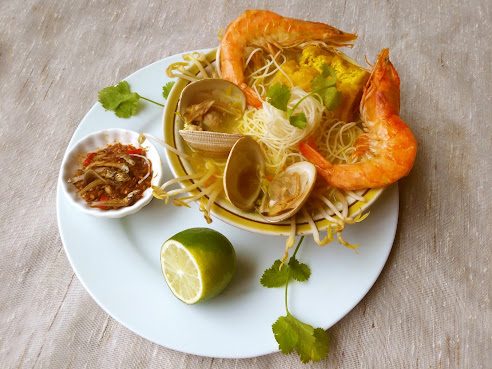
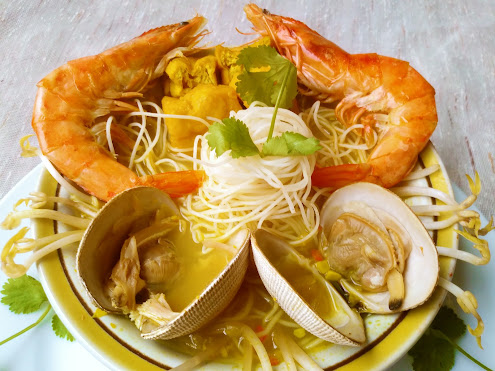
Mee Calong , also spelled Mi Calong, is a noodle dish eaten with fish soup, fish balls, and tofu puffs. This original Beserah traditional cuisine was introduced to the local people of Beserah years ago by a Malay trader from Terengganu known as Cik Kadir.
It is a traditional soup noodle meal widely enjoyed in Terengganu and along the East Coast of Malaysia. The star of this healthy, flavourful dish is its hand-rolled fish balls made from scratch. No flour, no fillers, no additives. Just wholesome protein-packed fish!
INGREDIENTS
For fishballs
. 300 gm fresh sardine/mackerel - meat only
. 1 red onion - roughly sliced
. 1-2 garlic cloves
. ½ teaspoon black peppercorns
. Salt to taste
For soup base
. 1 red onion - thinly sliced
. 2 garlic cloves - thinly sliced
. 3 tablespoons cooking oil
. 1.5 litres of water
. 1 Maggi Ikan Bilis Stock Cube
. 20 pieces of fish crackers (keropok ikan)
. 1 tablespoon freshly ground black pepper
For soup ingredients
. 1 pack yellow noodles
. ½ pack tofu pok - cut into halves
. 1 bundle of choy sum - cut & separate leaves from stalks
. 20 tiger prawns - peeled & deveined
. 2 red chillies - sliced
. Salt to taste
For garnish
. Crispy fried garlic
. Fried onions
INSTRUCTIONS
1. In a food processor, combine fish meat with red onion, garlic, black peppercorns and salt then grind until it forms a paste. Wet hands and roll fish paste into round balls. Set aside.
2. Heat cooking oil in a non-stick high-sided fry pan, then sauté sliced red onions with sliced garlic until crisp and golden brown.
3. In the same pan, add water and ikan bilis stock cube then bring it to a boil.
4. As it boils, add fish crackers and freshly ground black pepper. Simmer until fish crackers expand and soften. Then, add in the fish balls and continue cooking.
5. Add tiger prawns, tofu pok, sliced chillies and choy sum stalks. Let it cook for 2 minutes.
6. Once cooked, add yellow noodles and choy sum leaves then simmer for 3 minutes.
7. Garnish with crispy fried garlic and fried onions.
When it’s done, just serve this meal straight from stovetop to table in a bowl and plate.
It is a traditional soup noodle meal widely enjoyed in Terengganu and along the East Coast of Malaysia. The star of this healthy, flavourful dish is its hand-rolled fish balls made from scratch. No flour, no fillers, no additives. Just wholesome protein-packed fish!
INGREDIENTS
For fishballs
. 300 gm fresh sardine/mackerel - meat only
. 1 red onion - roughly sliced
. 1-2 garlic cloves
. ½ teaspoon black peppercorns
. Salt to taste
For soup base
. 1 red onion - thinly sliced
. 2 garlic cloves - thinly sliced
. 3 tablespoons cooking oil
. 1.5 litres of water
. 1 Maggi Ikan Bilis Stock Cube
. 20 pieces of fish crackers (keropok ikan)
. 1 tablespoon freshly ground black pepper
For soup ingredients
. 1 pack yellow noodles
. ½ pack tofu pok - cut into halves
. 1 bundle of choy sum - cut & separate leaves from stalks
. 20 tiger prawns - peeled & deveined
. 2 red chillies - sliced
. Salt to taste
For garnish
. Crispy fried garlic
. Fried onions
INSTRUCTIONS
1. In a food processor, combine fish meat with red onion, garlic, black peppercorns and salt then grind until it forms a paste. Wet hands and roll fish paste into round balls. Set aside.
2. Heat cooking oil in a non-stick high-sided fry pan, then sauté sliced red onions with sliced garlic until crisp and golden brown.
3. In the same pan, add water and ikan bilis stock cube then bring it to a boil.
4. As it boils, add fish crackers and freshly ground black pepper. Simmer until fish crackers expand and soften. Then, add in the fish balls and continue cooking.
5. Add tiger prawns, tofu pok, sliced chillies and choy sum stalks. Let it cook for 2 minutes.
6. Once cooked, add yellow noodles and choy sum leaves then simmer for 3 minutes.
7. Garnish with crispy fried garlic and fried onions.
When it’s done, just serve this meal straight from stovetop to table in a bowl and plate.


▲ 9. Mee Siam
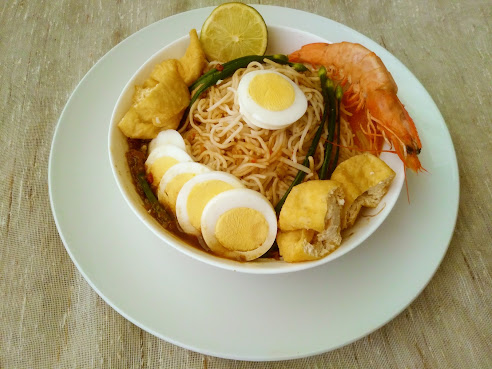
Mee siam is a dish of thin rice vermicelli of hot, sweet and sour flavours, originated in Penang but popular among the Malay and Peranakan communities throughout Peninsular Malaysia and Singapore, although the dish is called "Siamese noodle" in Malay and thus appears to be inspired or adapted from Thai flavours when Thailand was formerly known as Siam. Mee siam is related to kerabu bee hoon although there is a significant difference in the recipe.
Ingredients
Blended Spice Base Paste (split into 2 equal portions)
. 30g or 30 stalks Dried Chillies, soaked in boiling water for 5 mins
. 50g or 1 medium-sized Onion
. 20g or 4-5 cloves Garlic
. 40g or 4 tbsps Dried Shrimps, soaked in water
Stir Fried Vermicelli Bee Hoon
. 200g Bee Hoon or Vermicelli Rice Noodles
. 1/4 cup Neutral-tasting Cooking Oil
. 1 portion of Blended Base Paste
. 50g Beansprouts
. 1/2 cup Water
. 1 tsp Salt
. 1 tsp Sugar
Mee Siam Gravy
. 1 portion of the Blended Base Paste
. 1/4 cup Neutral-tasting Cooking Oil
. 3 tbsps Taucheo or about 60-80g, mashed
. 1.5 tbsps Tamarind Paste
. 1 litre of Water
. 1 tbsp of Sugar, or to taste
. 1-2 pieces of Dried Tamarind Slices (optional)
. 1/2 tsp Salt, to taste
Serve With:
. Boiled Eggs
. Boiled Prawns
. Chives
. Boiled beansprouts
. Tofu puffs or Taupok
. Calamansi Limes
Directions
Ingredients
Blended Spice Base Paste (split into 2 equal portions)
. 30g or 30 stalks Dried Chillies, soaked in boiling water for 5 mins
. 50g or 1 medium-sized Onion
. 20g or 4-5 cloves Garlic
. 40g or 4 tbsps Dried Shrimps, soaked in water
Stir Fried Vermicelli Bee Hoon
. 200g Bee Hoon or Vermicelli Rice Noodles
. 1/4 cup Neutral-tasting Cooking Oil
. 1 portion of Blended Base Paste
. 50g Beansprouts
. 1/2 cup Water
. 1 tsp Salt
. 1 tsp Sugar
Mee Siam Gravy
. 1 portion of the Blended Base Paste
. 1/4 cup Neutral-tasting Cooking Oil
. 3 tbsps Taucheo or about 60-80g, mashed
. 1.5 tbsps Tamarind Paste
. 1 litre of Water
. 1 tbsp of Sugar, or to taste
. 1-2 pieces of Dried Tamarind Slices (optional)
. 1/2 tsp Salt, to taste
Serve With:
. Boiled Eggs
. Boiled Prawns
. Chives
. Boiled beansprouts
. Tofu puffs or Taupok
. Calamansi Limes
Directions
Blending the Base Paste
1. Rinse the dried chillies and add hot boiling water to rehydrate the chillies for about 5 minutes. Drain water away, and cut the dried chillies to smaller pieces for easier blending.
2. Rinse the dried shrimps. Rehydrate dried shrimps with warm water for about 5 minutes to soften. Do not drain the water away.
3. To a blender add the rehydrated dried chillies, chopped onions, garlic, dried shrimps along with the soaking water. Blend to a smooth paste. Add a couple tablespoons of water or oil if it is not blending easily.
4. Separate into two equal portions.
1. Rinse the dried chillies and add hot boiling water to rehydrate the chillies for about 5 minutes. Drain water away, and cut the dried chillies to smaller pieces for easier blending.
2. Rinse the dried shrimps. Rehydrate dried shrimps with warm water for about 5 minutes to soften. Do not drain the water away.
3. To a blender add the rehydrated dried chillies, chopped onions, garlic, dried shrimps along with the soaking water. Blend to a smooth paste. Add a couple tablespoons of water or oil if it is not blending easily.
4. Separate into two equal portions.
Making the Mee Siam Gravy
1. Add oil to a pot, and let it heat over low to medium heat. Once hot, add one portion of the blended base paste. Stir fry over low heat for about 5-10 minutes, until the base paste dries down slightly and turns a darker shade. It should also be fragrant.
2. Mash taucheo to a rough paste. Add the mashed taucheo and stir to incorporate with the base paste.
3. Pour in water and stir to combine with the paste.
4. Stir in tamarind paste, sugar, and dried tamarind slice if using. Let gravy come to a boil.
5. Taste gravy, before seasoning with salt. Add sugar and tamarind paste, if needed. Gravy is ready to serve.
1. Add oil to a pot, and let it heat over low to medium heat. Once hot, add one portion of the blended base paste. Stir fry over low heat for about 5-10 minutes, until the base paste dries down slightly and turns a darker shade. It should also be fragrant.
2. Mash taucheo to a rough paste. Add the mashed taucheo and stir to incorporate with the base paste.
3. Pour in water and stir to combine with the paste.
4. Stir in tamarind paste, sugar, and dried tamarind slice if using. Let gravy come to a boil.
5. Taste gravy, before seasoning with salt. Add sugar and tamarind paste, if needed. Gravy is ready to serve.
Stir Fried Vermicelli Noodles
1. Add dry vermicelli or bee hoon noodles to a bowl, and add hot water to cover noodles. Allow to soak and rehydrate for 15 to 20 minutes. Drain completely and softened vermicelli is now ready for use.
2. To a pan, add oil and let it heat over low to medium heat. Once hot, add one portion of the blended base paste. Stir fry over low heat for about 5-10 minutes, until the base paste dries down slightly and turns a darker shade. It should also be fragrant.
3. Add water, salt and sugar to taste. Stir to incorporate, and allow mixture to come to a boil.
Once it boils, add the vermicelli and toss through to evenly coat noodles with spice paste.
4. Add beansprouts and toss through.
Fried vermicelli are done and ready to serve.
1. Add dry vermicelli or bee hoon noodles to a bowl, and add hot water to cover noodles. Allow to soak and rehydrate for 15 to 20 minutes. Drain completely and softened vermicelli is now ready for use.
2. To a pan, add oil and let it heat over low to medium heat. Once hot, add one portion of the blended base paste. Stir fry over low heat for about 5-10 minutes, until the base paste dries down slightly and turns a darker shade. It should also be fragrant.
3. Add water, salt and sugar to taste. Stir to incorporate, and allow mixture to come to a boil.
Once it boils, add the vermicelli and toss through to evenly coat noodles with spice paste.
4. Add beansprouts and toss through.
Fried vermicelli are done and ready to serve.
Noodle Assembly
Add the fried vermicelli to a bowl and top with the gravy. Serve with boiled eggs and prawns and garnish with chives, tofu puffs or taupok, and calamansi lime.
Add the fried vermicelli to a bowl and top with the gravy. Serve with boiled eggs and prawns and garnish with chives, tofu puffs or taupok, and calamansi lime.


Next Special, Thanksgiving Dinner at Byrne Creek Manor, Burnaby for Seniors
Coming Next Special, Halloween Delights 2024
Coming Soon, Cariboo Lodge Kar Cuisine Part 1 of 3
Coming, Seasonal Salad Around The World : Asia Part 1 of 4
Publisher: Chef Kar Delight