Indonesian Delights 2024 Part 1 of 2 2023/10/09

1. Kue Lupis
Indonesian Sweet Sticky Rice Dumplings

Lupis (sometimes lopis) is an Indonesian traditional sweet cake made of glutinous rice, banana leaves, coconut, and brown sugar sauce. Lupis is one of many glutinous rice desserts from Indonesia. Lupis are sometimes cylindrically shaped like Lontong. Lupis is usually eaten with thick palm sugar syrup and with shredded coconut toppings. Often eaten at breakfast or as a side dish during the evening, lupis is often sold at traditional marketplaces throughout Indonesia and is a popular food found nationwide, but especially in middle and eastern Java as well as West Sumatra. Lupis is one of the top desserts that tourists who visit Purwokerto in Java seek.


2. Lemper Ayam
Coconut Flavored Sticky Rice with Chicken

Lemper is an Indonesian savoury snack made of glutinous rice filled with seasoned shredded chicken, fish abon (meat floss) or serundeng. The specific lemper filled with seasoned shredded chicken is called lemper ayam (chicken lemper). The meat filling is rolled inside the rice, in a fashion similar to an egg roll; this is in turn rolled and wrapped inside a banana leaf, oil paper, plastic sheet, or tinfoil to make a packet ready for serving. If banana leaf is not available, corn husk can be used. Lemper are most often seen as snacks, but may sometimes be served as appetizers as well. Lemper usually has an elongated shape, similar to lontong.
Lemper is very similar to arem-arem and bakcang (Chinese zongzi), and also resembles Japanese onigiri.
The glutinous rice is soaked and cooked with coconut milk and salt. The filling is made of shredded chicken breast, chicken stock, garlic, candle nut, ground coriander, cumin, brown sugar, vegetable oil, minced shallot, coconut milk, kaffir lime leaves, salt and pepper. Other than chicken, shredded fish, abon (beef meat floss), or serundeng might be used as filling.
When the cooked glutinous rice is cool enough to handle, the chicken filling is placed on the glutinous rice and rolled in a banana leaf, wrapped and secured with biting or lidi semat, a small wooden "needle" made of coconut leaf midrib or bamboo. Then these banana leaf packages are steamed or grilled. This releases a distinct pleasant aroma of toasted banana leaf.
Ingredients:
Glutinous rice
300 gram white glutinous rice (Indonesian: beras ketan putih), soak for 4 hours or overnight
225 ml coconut milk (Indonesian: santan)
4 kaffir lime leaves (Indonesian: daun jeruk)
4 Indonesian bay leaves (Indonesian: daun salam)
2 pandan leaves (Indonesian: daun pandan), knotted
1/2 teaspoon salt
300 gram white glutinous rice (Indonesian: beras ketan putih), soak for 4 hours or overnight
225 ml coconut milk (Indonesian: santan)
4 kaffir lime leaves (Indonesian: daun jeruk)
4 Indonesian bay leaves (Indonesian: daun salam)
2 pandan leaves (Indonesian: daun pandan), knotted
1/2 teaspoon salt
Spiced chicken floss
250 gram boneless skinless chicken breast (Indonesian: daging dada ayam)
2 tablespoon oil
50 gram shallots (Indonesian: bawang merah)
3 cloves garlic (Indonsian: bawang putih)
3 candlenuts (Indonesian: kemiri), optional
1/2 teaspoon coriander seeds (Indonesian: biji ketumbar)
1/2 teaspoon cumin seeds (Indonesian: biji jinten)
2 kaffir lime leaves (Indonesian: daun jeruk)
2 Indonesian bay leaves (Indonesian: daun salam)
1 teaspoon tamarind + 3 tablespoon water, seeds and pulp removed
125 ml coconut milk
1/2 teaspoon salt
2 1/2 tablespoon sugar
250 gram boneless skinless chicken breast (Indonesian: daging dada ayam)
2 tablespoon oil
50 gram shallots (Indonesian: bawang merah)
3 cloves garlic (Indonsian: bawang putih)
3 candlenuts (Indonesian: kemiri), optional
1/2 teaspoon coriander seeds (Indonesian: biji ketumbar)
1/2 teaspoon cumin seeds (Indonesian: biji jinten)
2 kaffir lime leaves (Indonesian: daun jeruk)
2 Indonesian bay leaves (Indonesian: daun salam)
1 teaspoon tamarind + 3 tablespoon water, seeds and pulp removed
125 ml coconut milk
1/2 teaspoon salt
2 1/2 tablespoon sugar


3. Klepon
Pandan Glutinous Rice Balls with Palm Sugar

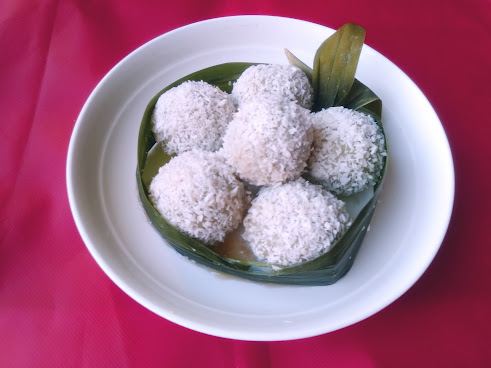
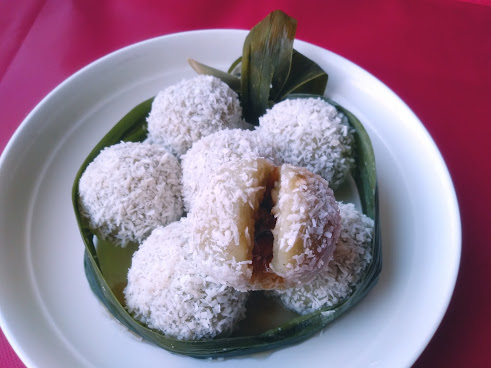
Klepon (pronounced Klē-pon) or kelepon, also known outside Java as onde-onde, is a snack of sweet rice cake balls filled with molten palm sugar and coated in grated coconut. Of Javanese origin, the green-coloured glutinous rice balls are one of the popular traditional kue in Indonesian cuisine.
Klepon is a boiled rice cake stuffed with liquid palm sugar (gula jawa/merah/melaka) and coated in flaked coconut. The dough is made from glutinous rice flour, sometimes mixed with tapioca, and a paste made from the leaves of the pandan or dracaena plants (daun suji) — whose leaves are used widely in Southeast Asian cooking – giving the dough its green colour.
The small pieces of palm sugar are initially solid when inserted into the glutinous rice dough and rolled into balls. The balls are subsequently boiled, which melts the palm sugar and creates a sweet liquid inside the balls' cores. Skill is involved in ensuring that the liquid does not leak out of the final product. The balls are finally rolled in shredded coconut, adhering to the sticky surface of the glutinous rice dough.
Klepon are ideally left to cool for some time before consumption to prevent burning from the hot liquid palm sugar. They are traditionally served in banana leaves, usually in sets of four or ten balls; plastic packaging is also used in recent times.
Ingredients (serving for 22-24 pieces)
For the dough:
· 100g glutinous rice flour
· 25g plain rice flour
· A pinch of salt
· 100ml warm water
· 5 drops of “pandan” leaf essence or green dye
For filling:
· Palm sugar
For the layer:
· Shredded coconut
Steps to follow
1. Prepare the filling: cut brown sugar into small pieces.
2. Prepare the dough: Mix glutinous rice flour, rice flour, salt, water, and pandan leaf essence well.
3. Put the filling in the pasta. Take 2/3 small tablespoons of the pasta, form like a ball and flatten it well. Place some filling inside. Close it well and place the balls separately on a board.
4. Bring plenty of water to a boil in a saucepan. Boil the balls for about 10 minutes.
5. Place a drainer on top to steam the shredded coconut as well.
6. Place the cooked shredded coconut on a plate. drain the balls well, pass them through the shredded coconut and enjoy.
For the dough:
· 100g glutinous rice flour
· 25g plain rice flour
· A pinch of salt
· 100ml warm water
· 5 drops of “pandan” leaf essence or green dye
For filling:
· Palm sugar
For the layer:
· Shredded coconut
Steps to follow
1. Prepare the filling: cut brown sugar into small pieces.
2. Prepare the dough: Mix glutinous rice flour, rice flour, salt, water, and pandan leaf essence well.
3. Put the filling in the pasta. Take 2/3 small tablespoons of the pasta, form like a ball and flatten it well. Place some filling inside. Close it well and place the balls separately on a board.
4. Bring plenty of water to a boil in a saucepan. Boil the balls for about 10 minutes.
5. Place a drainer on top to steam the shredded coconut as well.
6. Place the cooked shredded coconut on a plate. drain the balls well, pass them through the shredded coconut and enjoy.


4. Nagasari
Steamed Banana Rice Cake
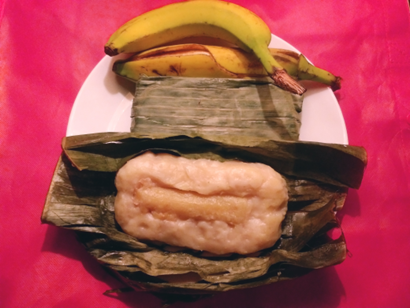
Nagasari is a traditional Indonesia steamed cake, originating from Javanese cuisine, made of rice flour, coconut milk and sugar, filled with a slice of banana and wrapped in banana leaves.
INGREDIENTS 12 PIECES
· 1 large very ripe banana You can use pisang raja, saba bananas, or plantains
BATTER:
· 125 gr rice flour
· 40 gr tapioca flour
· 600 ml coconut milk
· 80 gr sugar
· 1 tsp vanilla extract
· 1/4 tsp salt
FOR WRAPPING:
· Banana leaves for wrapping
INSTRUCTIONS
1. Peel the banana and slice about 1/2-inch thickness at an angle. Set aside. Cut out about 10 pieces of 6 x 6 inch square of banana leaves.
2. Some banana leaves are thick and rigid, you may need to boil it briefly in a hot water for 1 minute or so until it's soft and pliable. It they are manageable without boiling, just wipe it clean with damp cloth on both sides
3. Place all ingredients for batter in a saucepan and whisk until no lumps
4. Put the saucepan on the stove on medium-low heat, turn on the heat and keep whisking. It may seem like nothing happens for the first 5 minutes, but keep whisking and you will start seeing some "curds". Keep whisking and the batter will thicken
WRAPPING:
1. Get your steamer ready by bringing water to a boil. Spread about 2 Tbsp of the batter in the middle of the leaves. Place one slice or two of bananas on top and fold the two sides up continue with folding the other two sides down, as if you are wrapping a parcel
STEAMING:
1. Steam the nagasari for about 10 minutes over medium heat. This cake can be served warm, at room temperature, or after being chilled in the fridge
· 1 large very ripe banana You can use pisang raja, saba bananas, or plantains
BATTER:
· 125 gr rice flour
· 40 gr tapioca flour
· 600 ml coconut milk
· 80 gr sugar
· 1 tsp vanilla extract
· 1/4 tsp salt
FOR WRAPPING:
· Banana leaves for wrapping
INSTRUCTIONS
1. Peel the banana and slice about 1/2-inch thickness at an angle. Set aside. Cut out about 10 pieces of 6 x 6 inch square of banana leaves.
2. Some banana leaves are thick and rigid, you may need to boil it briefly in a hot water for 1 minute or so until it's soft and pliable. It they are manageable without boiling, just wipe it clean with damp cloth on both sides
3. Place all ingredients for batter in a saucepan and whisk until no lumps
4. Put the saucepan on the stove on medium-low heat, turn on the heat and keep whisking. It may seem like nothing happens for the first 5 minutes, but keep whisking and you will start seeing some "curds". Keep whisking and the batter will thicken
WRAPPING:
1. Get your steamer ready by bringing water to a boil. Spread about 2 Tbsp of the batter in the middle of the leaves. Place one slice or two of bananas on top and fold the two sides up continue with folding the other two sides down, as if you are wrapping a parcel
STEAMING:
1. Steam the nagasari for about 10 minutes over medium heat. This cake can be served warm, at room temperature, or after being chilled in the fridge


Next, Indonesian Delights 2024 Part 2 of 2
Publisher: Chef Kar Delight


